
Why laminate at all
A single film rarely meets every requirement at once. The print surface has to look right and carry the design; the barrier layer has to keep out oxygen, moisture or light; the sealant has to run reliably on the filling line. Lamination combines materials with different jobs so each layer can do its own.
A typical flexible structure combines a printed film, a barrier layer and a sealant. Which materials and how many layers are used depends on the product, shelf life, retort or frozen conditions, pouch format and filling equipment. A photograph of a machine cannot answer those questions.
What happens on the machine
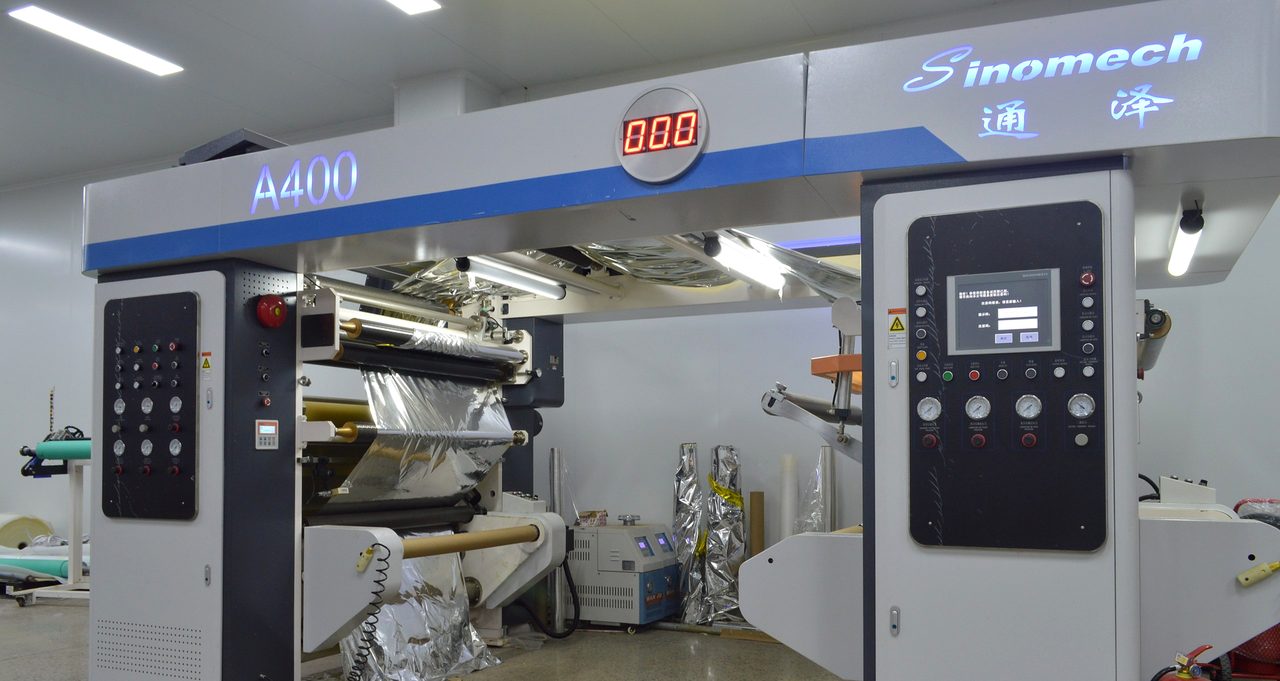
A lamination line generally includes unwinding, coating or combining, drying where the process requires it, a nip roller and rewinding. One substrate unwinds and is joined to another under pressure before the combined web is rewound. The control panel is used to set and monitor tension, temperature and speed.
The machine in the photograph carries an A400 marking, but its appearance alone does not establish which lamination method, adhesive system or structure it is approved for. Those details have to be confirmed by the factory against the actual process, and this article makes no performance claim for a specific model.
What lamination quality means
The first check is bond uniformity: no bubbles, wrinkles, tunnelling or weak peel strength. Tension and rewinding matter too. A roll wound too loose wrinkles; one wound too tight can block or distort. On printed film, registration and surface condition must survive the lamination step.
Laminated film normally goes on to curing, slitting and bag making. Each step affects the final appearance, seal and barrier performance, so lamination is not an isolated combining operation but part of the structure design.
Working on a new pack?
Send us the product and target shelf life. We will help with the structure.